









Contents:
- Why Rose Quality Matters More Than Most Shoppers Realize
- Step 1 — Assess the Bud Stage Before Anything Else
- Step 2 — Examine Petal Color and Edge Condition
- Step 3 — Inspect the Stems for Firmness, Color, and Integrity
- Step 4 — Check the Foliage and Calyx
- Step 5 — Evaluate Fragrance as a Freshness Signal
- Step 6 — Consider the Source and Turnover Rate
- Common Mistakes to Avoid
- Pro Tips for Getting the Most from Your Fresh Roses
- Frequently Asked Questions
- How do I know if roses are truly fresh at the grocery store versus a florist?
- What’s the ideal bud stage to buy roses for a wedding or event?
- Why do some fresh-looking roses wilt within a day of purchase?
- Are longer stems a sign of better quality roses?
- Does re-cutting stems actually make a measurable difference?
- Choosing Quality Is a Learnable Skill
Most people assume they can spot a good rose at a glance. They’re wrong — and that mistake costs them money, shortened vase life, and the quiet disappointment of watching beautiful blooms collapse within two days of bringing them home. The difference between a rose that lasts ten days and one that wilts in three almost never shows up in the color of the petals. It shows up in details most buyers never think to check.
This guide walks you through every one of those details. Whether you’re buying roses for a wedding, a birthday, a weekly home arrangement, or just because, the same set of principles applies. By the time you finish reading, you’ll know more about evaluating cut rose quality than most retail florists will ever tell you.
To choose a high-quality rose bouquet, check for firm, tight buds that have not yet opened fully; deep, even petal color without browning at the edges; stems that are straight, hard, and green all the way down; and leaves that are glossy without dark spots or yellowing. Avoid roses with split calyxes, slimy stem ends, or an off-putting odor. Buying from a reputable florist with fast turnover — or ordering fresh roses delivery direct from a farm-sourced supplier — gives you a significant head start on freshness.
Why Rose Quality Matters More Than Most Shoppers Realize
Cut flowers are perishable goods with a biological clock that starts ticking the moment they’re harvested. A rose cut from a farm in Colombia or Ecuador will typically arrive at a U.S. distribution hub within 24–48 hours via air freight, spend another day or two at a wholesale warehouse, then travel to a retail florist or grocery store. By the time it reaches the consumer, anywhere from three to seven days may have already elapsed since harvest — before the clock on your kitchen counter even starts.
That background timeline matters because every day of pre-sale storage shortens the vase life you’ll actually experience at home. A rose with a natural potential of 14 days post-harvest that spent six days in the supply chain before you bought it will last roughly eight days for you — not fourteen. A rose that spent ten days in transit or sitting on a warm shelf might barely make it past the weekend.
Understanding this supply chain reality reframes how you think about quality. You’re not just evaluating how the rose looks on the day of purchase. You’re estimating how many days of freshness remain in reserve. Every physical indicator described below is a proxy for that remaining reserve.
Step 1 — Assess the Bud Stage Before Anything Else
The first thing to check on any cut rose is the stage of bud development. This single factor tells you more about remaining vase life than almost anything else you can observe without a laboratory.
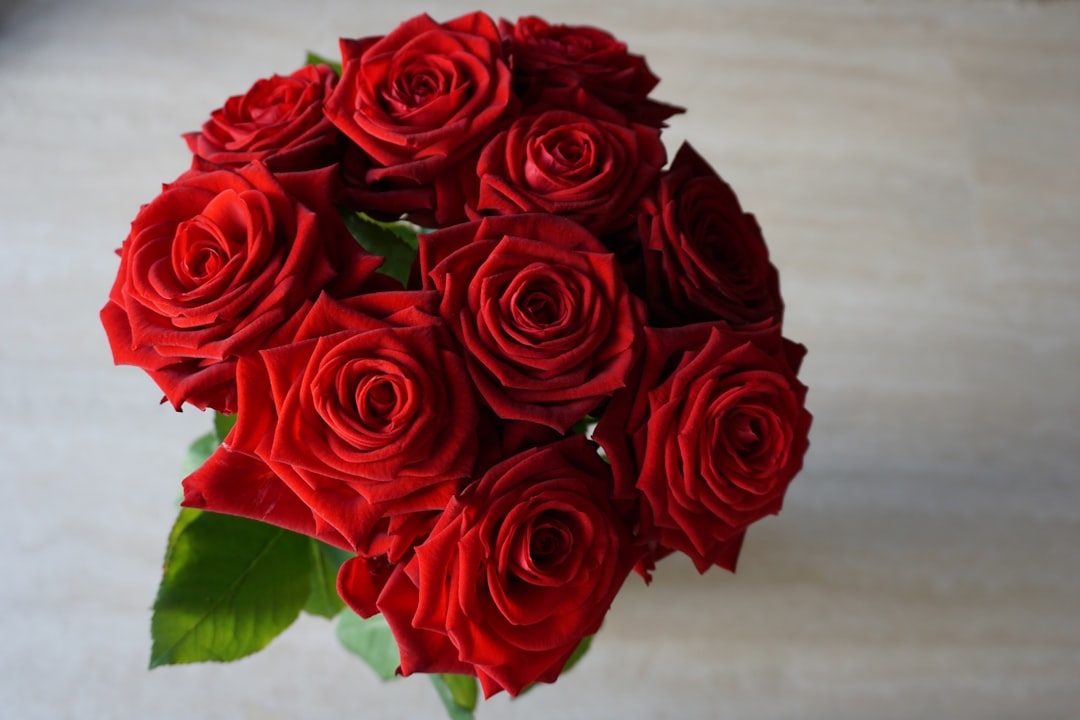
Rose buds go through predictable developmental stages after harvest. Professionals generally classify these stages on a 1–5 scale, where Stage 1 is a tight, closed bud and Stage 5 is a fully open bloom. For retail purchase, Stage 2 to Stage 3 is the sweet spot — the outer petals have just begun to unfurl, showing color, but the bloom has not opened past one-third of its final diameter.
A Stage 2–3 rose still has the majority of its opening journey ahead of it. You get to watch it bloom in your home, and it retains the structural integrity that holds petals firmly in place through handling and transport. A Stage 4 or 5 rose, no matter how dramatic and beautiful it looks in the display case, is already deep into its lifespan. It will open fully within hours and begin petal drop within a day or two.
Grocery store bundles, in particular, tend to carry more fully opened roses because they photograph and display beautifully at Stage 4. That visual appeal masks the fact that you’re often buying the last 20–30% of the flower’s life. When you have a choice, always select the less dramatic bud over the showstopper bloom.
Step 2 — Examine Petal Color and Edge Condition
Color evaluation in roses requires looking at two separate things: the depth of color across the petal face, and the condition of the petal edges. These tell you different stories.
Depth and evenness of color indicates good cell health and proper hydration during the post-harvest period. A rose with rich, saturated, uniform color — whether that’s deep crimson, soft blush, or bright coral — has been reasonably well cared for since it was cut. Faded or washed-out coloring, particularly near the petal base, can indicate that the rose was stored too cold for too long (chilling injury) or suffered inconsistent water uptake.
Edge browning is one of the most reliable freshness indicators available to the naked eye. The outer petal edges are the first tissue to dehydrate and oxidize as a rose ages. A thin, translucent brown margin — sometimes called “burning” in the trade — signals that the rose has been exposed to low humidity, heat, or ethylene gas (a natural ripening compound released by aging flowers and fruit). Even mild edge browning on the guard petals (the outermost protective petals) should make you look more carefully at the rest of the bouquet before purchasing.
Note that some discoloration on the outermost guard petals is deliberately left by growers because these petals serve as protective packaging for the inner bloom. A single guard petal with slight marking is not automatically disqualifying. But if the browning penetrates to the second or third layer of petals, walk away.
Step 3 — Inspect the Stems for Firmness, Color, and Integrity
The stem is the rose’s lifeline — literally. It’s the vascular channel through which water and dissolved sugars travel from the cut end up to the bloom. A compromised stem means a compromised flower, regardless of how good the petals look at the moment of purchase.
Run your fingers along the stem from bloom to base. A fresh, healthy rose stem should feel firm and slightly rigid, similar to a fresh green bean. Any softness, sponginess, or hollow feeling in the stem indicates that bacterial decomposition has begun — a process that blocks the xylem vessels that carry water upward. Once bacterial blockage is established, it advances quickly, and no amount of re-cutting or fresh water will fully reverse it.
The stem color should be a consistent, healthy green from top to bottom. Some varieties show a slight reddish blush near the bloom — that’s normal. What you’re looking for is a stem that has not begun yellowing, browning, or developing a grayish tinge along its length. Those color changes indicate tissue breakdown.
The cut end itself deserves special attention. It should look clean and freshly sliced, or show a slight white rim from a previous clean cut in water. A black, slimy, or strongly odorous stem end means bacterial colonies have been actively growing there, likely for days. This is a hard pass, regardless of how the bloom looks above it.
Step 4 — Check the Foliage and Calyx
The leaves on a cut rose are often treated as decorative afterthoughts, but they’re actually excellent freshness indicators. Healthy rose foliage should be glossy, deep green, and firmly attached to the stem. Leaves that have gone dull, developed dark spots, or yellowed significantly are telling you the plant has been under metabolic stress — usually from age, bacterial contamination in the water, or improper storage temperature.
Some yellowing of the lower leaves is common and not immediately alarming, particularly if the upper foliage looks good. But widespread yellowing or the presence of black spot fungal markings (circular black spots with yellow halos) suggests systemic health issues that will accelerate post-purchase decline.
The calyx — the green star-shaped structure at the base of the bloom that holds the petals in their cup — should be firm and tightly cupped around the flower. A split calyx, where the sepals have opened and spread flat or backward, indicates that the rose has been artificially or prematurely forced open, often through exposure to heat or ethylene gas during transport. Roses with split calyxes tend to shatter (lose petals suddenly) far sooner than those with intact calyxes.
Step 5 — Evaluate Fragrance as a Freshness Signal
The relationship between rose fragrance and freshness is more nuanced than most buyers expect. Not all rose varieties are bred for scent — many of the high-volume commercial varieties grown for visual perfection and long stem length have had most of their fragrance bred out in favor of other traits. So the absence of a strong scent does not automatically mean a rose is old.
What fragrance can reliably tell you is this: a rose that smells fresh, clean, and floral — even faintly — is in reasonably good condition. A rose that smells of nothing at all may simply be a low-fragrance variety. A rose that smells fermented, musty, sour, or off in any way has begun to decompose. That off-smell usually originates at the stem end or from bacterial activity in the vase water the roses were stored in, and it’s a sign the entire batch has been held too long.
When you’re evaluating roses in a shop, lean close to a partially opened bloom and take a slow breath. Clean floral notes, green herbal notes, or even a very faint sweet scent are all good signs. Anything that triggers a negative reaction in your nose is telling you something real about the flower’s biological state.
Step 6 — Consider the Source and Turnover Rate
All the physical inspection skills above become more powerful when you apply them in the right buying environment. A florist who receives fresh inventory twice a week and sells it quickly will almost always have higher-quality stock than one who receives a large weekly shipment and holds it for days in an improperly calibrated cooler.
Ask your florist when their roses were last restocked and where they source from. Farm-direct suppliers and florists who work with established importers who use cold chain logistics throughout the process consistently deliver better-quality product. If a florist seems annoyed or evasive when you ask about sourcing and freshness, treat that as useful information about their inventory management.
For many buyers, the most reliable option is to order flower delivery from a retailer that sources directly from growers and ships on a short timeline. This eliminates the multiple-day holding periods that accumulate in traditional retail chains and gets cut flowers from farm to door in as little as 24–48 hours. For time-sensitive occasions — weddings, events, significant gifts — that freshness advantage is not trivial.
Common Mistakes to Avoid
- Buying fully open blooms for lasting arrangements. A fully open rose is beautiful right now, but it has very little vase life left. For arrangements you want to enjoy for more than two days, always select buds at Stage 2–3.
- Ignoring the stem ends. Most people look at the bloom and never check the base of the stem. A slimy, black, or foul-smelling stem base is a firm sign the rose is past its prime, no matter how the petals look.
- Assuming a higher price means better quality. In retail flower settings, price often reflects variety and presentation more than freshness. An expensive rose that’s been sitting in a warm display for five days is a worse purchase than a modestly priced rose that arrived this morning.
- Skipping the squeeze test. Gently pressing the base of the bud between two fingers should feel firm and springy, not soft or papery. Softness at the bud base means the inner petals are already breaking down.
- Buying from shops with poor cooler discipline. Roses should be stored between 33°F and 38°F (1–3°C) for optimal preservation. If the shop’s display cooler feels warm, or if roses are displayed in warm ambient conditions for hours, the inventory has been aging faster than it should.
- Mixing roses with ethylene-producing fruits. Once you bring roses home, keep them away from fruit bowls, particularly bananas, apples, and pears. Ethylene gas released by ripening fruit accelerates petal aging significantly.
Pro Tips for Getting the Most from Your Fresh Roses
Selecting a high-quality bouquet is only the first half of the equation. How you handle roses from the moment you bring them home determines whether you experience their full potential vase life or lose days to avoidable care errors.
Re-cut stems immediately. Cut at least one inch from the stem end, using a sharp, clean knife or floral shears, at a 45-degree angle. This removes the dried or compromised tissue that formed since the last cut and reopens the vascular pathway. Do this under running water or while the stem is submerged to prevent air bubbles from entering the xylem.
Use clean water with floral preservative. Commercial floral preservative packets — the small envelopes often included with bouquets — contain three components: sugar (fuel for the bloom), a biocide (to suppress bacterial growth), and an acidifier (to lower water pH, which improves water uptake). These packets are not just a marketing addition; they meaningfully extend vase life in controlled studies. If you don’t have a packet, a small amount of lemon juice and a pinch of sugar is a reasonable improvised substitute.
Change the water every two days. Bacterial populations in vase water double rapidly at room temperature. Fresh water with a new dose of preservative every 48 hours keeps the stem ends cleaner and the water clearer, extending bloom life noticeably.
Remove submerged leaves. Any foliage sitting below the waterline will decompose quickly and dramatically accelerate bacterial growth in the vase. Before placing roses in a vase, strip all leaves from the bottom third of the stem.
Keep roses away from direct sunlight and heat sources. A vase on a sunny windowsill looks appealing, but warmth accelerates cellular respiration and water loss in cut flowers. A cooler, bright room extends vase life more than a warm, sunny spot. At night, moving roses to the coolest room in the house — or even briefly into the refrigerator if space permits — can add extra days to their lifespan.
If you’re curious about specific rose varieties and their characteristics, The Scarlet Flower offers a helpful overview of specialty blooms at https://thescarletflower.com/pages/orange, including color profiles and arrangement uses that can inform your selection.
Frequently Asked Questions
How do I know if roses are truly fresh at the grocery store versus a florist?
The physical indicators are the same regardless of where you buy: firm stems, tight buds, clean petal edges, and healthy foliage. The difference lies in turnover rates. Specialty florists generally receive smaller, more frequent deliveries and have trained staff who condition and care for their inventory properly. Grocery stores often hold larger volumes with less specialized care. This doesn’t mean grocery store roses are always inferior — some chains have excellent floral departments — but it does mean you should apply your freshness checklist more rigorously at a general retailer than at a dedicated florist.
What’s the ideal bud stage to buy roses for a wedding or event?
For events where you need roses at their visual peak on a specific date, purchase them at Stage 2 and allow them to open in a controlled environment. Roses purchased in a tight Stage 2 bud three to four days before an event, kept in a cool room between 60°F and 65°F with proper water care, will typically reach an ideal open Stage 3–4 by the event date. Timing this correctly requires a little experience with how fast specific varieties open, so doing a trial run a few weeks in advance with the same variety is worth the effort for an important occasion.
Why do some fresh-looking roses wilt within a day of purchase?
Rapid wilting in apparently fresh roses almost always traces to one of three causes: bacterial blockage of the stem vessels (usually from stem ends that were never re-cut after purchase), air embolism in the xylem (from cutting stems in open air and not getting them into water quickly), or ethylene damage sustained during transit or storage. The fix for the first two is a clean re-cut under water immediately upon arrival home, followed by a long drink in deep, cool water with floral preservative for several hours. Ethylene damage, unfortunately, is not reversible — it’s a sign the roses were improperly stored before you bought them.
Are longer stems a sign of better quality roses?
Stem length is a breeding and growing characteristic, not a freshness indicator. Longer-stemmed roses command higher prices because they require more resources to grow and suit certain formal presentation styles, but a 24-inch stem is not inherently fresher or longer-lasting than an 18-inch stem of the same variety in the same condition. Vase life is determined by the age of the flower and how it was handled, not stem length. When evaluating quality, assess the bud stage, petal condition, stem firmness, and foliage health — not whether the stems are impressively long.
Does re-cutting stems actually make a measurable difference?
Yes, and the research on this is fairly consistent. A fresh diagonal cut reopens the vascular tissue at the stem base and removes the dried, air-blocked section that formed when the stem was last out of water. Studies on cut flower longevity have shown that roses re-cut upon arrival in fresh water with preservative last measurably longer than those placed directly into a vase without a fresh cut. The difference is typically two to four additional days of vase life — which, for a flower that might otherwise last six days, is a meaningful percentage extension. Using a clean, sharp blade (not scissors, which crush vascular tissue) and cutting at a 45-degree angle to maximize surface area makes the effect more pronounced.
Choosing Quality Is a Learnable Skill
Nothing about selecting high-quality roses requires special training or expensive tools. It requires attention — a few seconds spent at each step of the checklist rather than a quick glance at the prettiest bloom in the display. The biology is straightforward once you understand it: a rose is a living organism managing a fixed budget of energy and water after it’s been cut from its root system. Your job as a buyer is to assess how much of that budget remains unspent.
Apply these criteria consistently and you’ll stop buying roses that disappoint. You’ll start choosing bouquets that last as long as they should, open at the pace they’re supposed to, and reward you with the full sensory experience that makes fresh roses worth every dollar spent on them.